
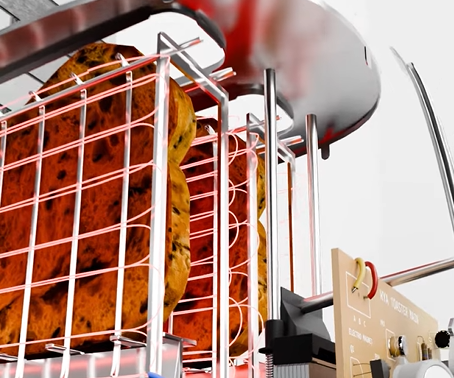
Bread Toaster Parts and Functions – How a Toaster Really Works, Step by Step
A toaster is one of those kitchen appliances we barely think about. It’s there every morning, ready to turn plain slices of bread into warm, crispy toast. We drop the bread in, push the lever down, and wait. That’s it.
But what actually happens inside?
In this article, we’re taking a closer look at bread toaster parts and functions. We’ll break down what a toaster is made of, what each part does, and how all these components work together to give us evenly browned toast—without burning it to a crisp.
Why Understanding Toaster Parts Is Useful
At first glance, this might seem unnecessary. After all, a toaster either works or it doesn’t—right?
Not exactly.
When we understand how a toaster works, we can:
recognize problems more quickly when something goes wrong
understand why toast comes out too dark or barely browned
make better decisions when buying a new toaster
use the appliance more safely and confidently
And honestly, it’s pretty fascinating how much clever engineering fits into such a small device.
The Main Parts of a Bread Toaster – A Quick Overview
Most standard pop-up toasters are built from the same core components:
Outer casing
Bread slots
Heating elements
Carriage and lever mechanism
Thermostat or timer
Control knob or buttons
Crumb tray
Power cord and internal wiring
Now let’s go through each part and explain what it does, one by one.
Outer Casing – The Protective Shell
The outer casing is the part we see and touch every day.
It determines not only the toaster’s look, but also its durability and safety.
Function:
Protects the internal components
Prevents direct contact with hot parts
Holds the entire structure together
Common materials:
Stainless steel – durable, modern, and easy to clean
Plastic – lightweight and often more affordable
Enamel-coated metal – stylish and retro, but more delicate
Most toasters also include insulation inside the casing. This helps keep the exterior from becoming dangerously hot during use.
Bread Slots – Where the Toast Goes In
Bread slots may seem simple, but they play a key role in how evenly the bread is toasted.
Function:
Hold the bread securely in place
Maintain proper distance from the heating elements
Common slot types:
Standard slots – for regular sliced bread
Wide slots – for thicker bread, bagels, or buns
Long slots – for artisan or sourdough slices
If slots are too narrow, bread can get stuck.
If they’re too wide, heat may not be distributed evenly.
Heating Elements – The Heart of the Toaster
This is where the real work happens.
What are heating elements?
They’re thin wires made from nichrome, a heat-resistant metal alloy that heats up quickly when electricity flows through it.
Function:
Produce radiant heat to toast the bread
Heat evenly on both sides
Cool down quickly after use
When the elements glow red, that’s completely normal—it’s a sign they’re working properly.

Carriage and Lever – The Lifting Mechanism
This is the part we interact with most: the lever we push down.
Function:
Lowers the bread into position
Activates the heating circuit
Pops the toast back up when it’s ready
How it works:
Pushing the lever down locks the carriage in place
A spring-loaded mechanism holds it during toasting
Once the cycle ends, the lock releases and the toast pops up
That satisfying “pop” is no accident—it’s pure mechanics at work.
Thermostat or Timer – Controlling the Browning Level
This component determines how long and how intensely the bread is toasted.
Two main systems:
1. Timer-based control
Runs for a set amount of time
Common in basic or budget models
Less precise with different bread types
2. Thermostat-based control
Measures temperature during toasting
Adjusts heat more accurately
Produces more consistent results
Many modern toasters combine both methods for better control.
Control Knob and Buttons – How We Communicate with the Toaster
These controls allow us to tell the toaster exactly what we want.
Common controls include:
Browning level dial – light to dark toast
Defrost button – for frozen bread
Reheat button – warms toast without browning more
Cancel button – stops the cycle instantly
Simple controls are easy to use.
Advanced controls offer more flexibility.
The best choice depends on how much control we want.

Crumb Tray – A Small Part That Matters a Lot
The crumb tray is often overlooked, but it’s surprisingly important.
Function:
Collects crumbs that fall during toasting
Prevents smoke and burnt smells
Reduces fire risk
Regular cleaning is essential. A full crumb tray can cause unpleasant odors, smoke, and even malfunction.
Power Cord and Internal Wiring – Supplying the Energy
This is the toaster’s internal network.
Function:
Delivers electricity to all components
Connects heating elements, controls, and safety systems
All internal wiring is insulated with heat-resistant materials to handle the high temperatures generated during use.
Safety Features – The Parts We Don’t See
Toasters may look simple, but safety is built into their design.
Common safety features:
Thermal fuse – shuts the toaster off if it overheats
Automatic shut-off – activates if bread gets stuck
Insulated housing – protects against burns
These components work quietly in the background but are essential for safe operation.

How All the Parts Work Together
Here’s what happens during a typical toasting cycle:
We insert the bread
We press the lever down
The heating elements turn on
The timer or thermostat monitors the process
The cycle ends and the toast pops up
Crumbs fall into the tray below
It feels effortless—but every part must work correctly for the result to be perfect.
Common Toaster Problems and Their Causes
Uneven browning – worn or damaged heating elements
Toast won’t pop up – faulty carriage or lever mechanism
Smoke or burning smell – crumb tray needs cleaning
Toaster won’t turn on – thermostat or thermal fuse issue
Knowing the function of each part makes troubleshooting much easier.
Conclusion
More Than Just a Simple Appliance…
A bread toaster may seem like a basic kitchen tool.
In reality, it’s a carefully designed system where every component plays a role.
By understanding bread toaster parts and functions, we:
become more informed users
extend the life of our appliances
enjoy better, more consistent toast
And let’s be honest—great toast is always worth the effort.
